Wall cladding is a protective outer layer fixed to a wall to shield the structure from rain, sun, and humidity while improving appearance. A wall cladding system includes the panels, sub-frame, and fixings. It often features a moisture barrier or ventilation gap so water drains, walls dry fast, and buildings last longer.
How Wall Cladding Works
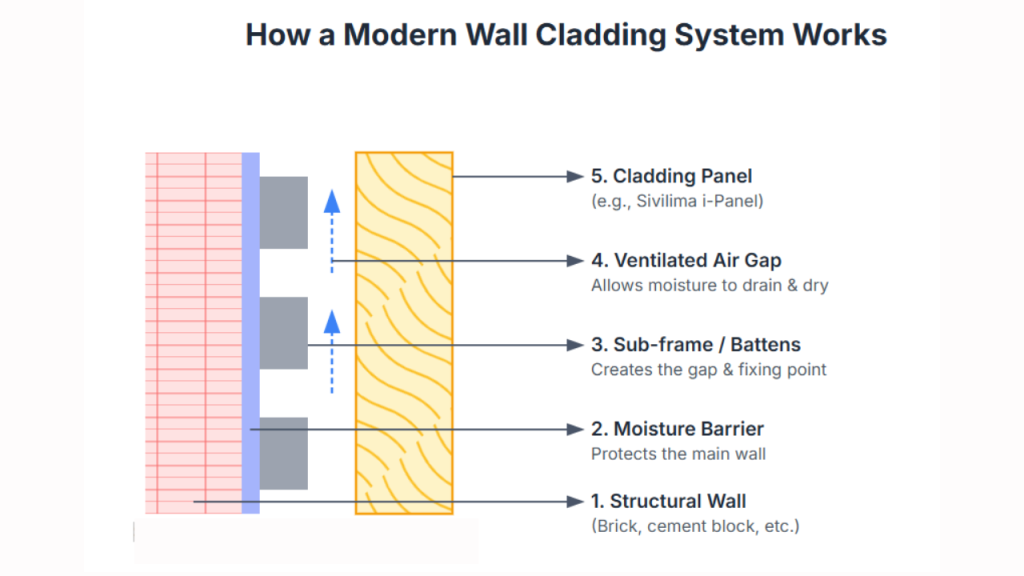
At its core, wall cladding is the process of layering. Cladding is defined by the application of one material over another to provide a protective and decorative skin for the walls of a structure.
The primary purpose of wall cladding is to protect a building from the elements. A complete wall cladding system does more than just cover the exterior; it involves multiple layers of materials that enhance durability.
The process of layering one material on top of another material which will create a barrier is fundamental. This one material is attached to the exterior of the main wall, and the way it is done affects the building’s performance.
The material used can significantly improve insulation and the overall building design. In essence, cladding refers to this comprehensive protective shield.
Benefits in Sri Lanka’s Climate
The right exterior cladding offers critical protection against Sri Lanka’s challenging tropical weather.
- Monsoon and Humidity Protection: A key reason cladding is used is to defend against heavy rain and persistent humidity. Cladding offers a robust barrier, and ventilated systems help walls dry out, preventing mould.
- Improved Insulation: Cladding provides a significant boost to thermal insulation. The cladding material itself has insulating properties, and the air gap in a rainscreen system adds another layer of insulation, helping to keep homes cooler.
- Durability and Protection: The right material used can resist coastal corrosion and damage from pests like termites. This helps maintain the structural integrity of a building and contributes to its lifespan.
- Aesthetics: Wall claddings completely transform a building’s appearance, offering immense flexibility for architectural expression in both residential construction and commercial projects.
Tip Box: Coastal Installation In coastal areas, always prefer aluminium or PVC fixings rated for high corrosion resistance to ensure the longevity of your wall cladding system.
Types of Wall Cladding in Sri Lanka
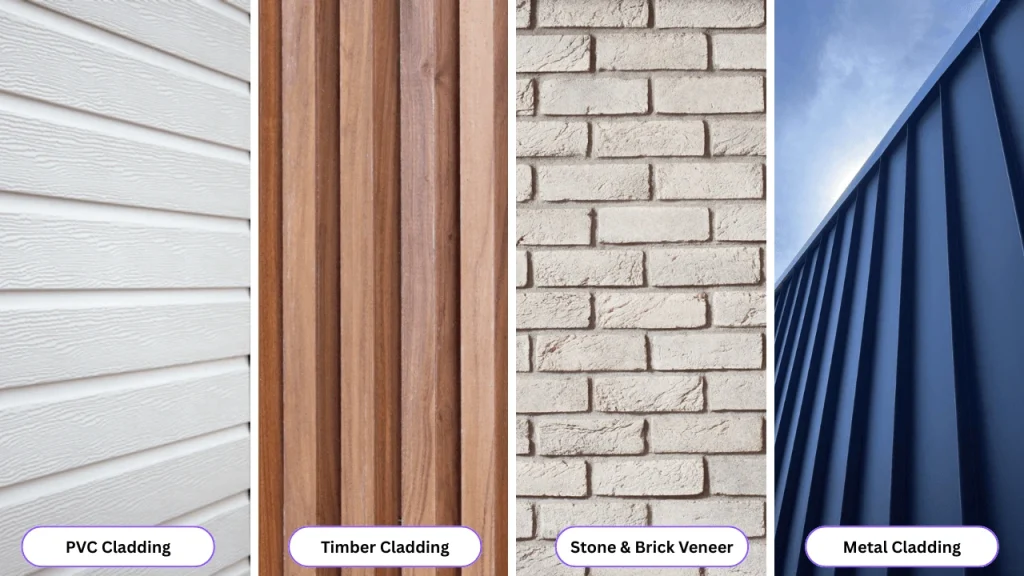
Cladding is available in a wide range of materials. The choice of cladding material is critical for both performance and budget. Below are some common wall cladding types.
PVC and Vinyl Cladding
PVC cladding and vinyl cladding are smart cladding options for Sri Lanka.
- Pros: This composite material is 100% waterproof and termite-resistant, offering a low maintenance solution. Vinyl cladding is available in many finishes.
- Cons: Higher initial cost than paint.
- Fire Safety Note: While standard PVC has poor fire resistance, specialized products like Sivilima’s i-Panels are treated to be fire-retardant.
Timber Cladding
Timber cladding provides a natural, traditional aesthetic.
- Pros: Beautiful, classic look.
- Cons: Timber is vulnerable to termites and rot without constant treatment. The maintenance for wood cladding can be costly.
- Best For: Interior feature walls or sheltered exteriors where a commitment to regular maintenance is possible.
Stone & Brick Veneer Cladding
Stone cladding and brick cladding offer a premium, durable finish.
- Pros: Brick is extremely durable and provides a timeless look. Stone cladding offers a unique, high-end finish.
- Cons: This choice of cladding is heavy and expensive. Installation often requires a reinforced cement or brick substrate.
- Gotcha: The weight of a traditional brick facade adds a significant structural load.
Metal (Aluminium/Steel) Cladding
Modern metal cladding often uses aluminium or steel. Aluminium cladding is a popular choice for contemporary designs.
- Pros: Aluminium is lightweight and corrosion-resistant. Steel cladding, especially stainless steel cladding, is very strong. Both aluminium and steel offer a sleek finish.
- Cons: Aluminium is prone to thermal expansion, requiring expert installation. It also has a higher initial cost. Condensation can be an issue without proper insulation.
- Gotcha: Quality aluminium cladding is an investment. Ensure your installer understands how to manage expansion and thermal breaks.
Other Cladding Options
Many different materials exist. Fiber cement cladding is a durable, paintable option. Composite cladding, made from composite materials, often blends wood fibers and plastics. For specific architectural projects, glass cladding and ceramic cladding are also used in modern designs.
Costs & ROI (LKR)
Understanding the total cost of ownership is more important than just the initial price. The Sri Lankan market for exterior cladding materials is dynamic, and prices can change. As of mid-2025, premium materials like aluminium cladding cost approximately LKR 289 per square foot. Mid-range options like quality vinyl are more affordable than aluminium but have a higher initial cost than paint.
While paint is the cheapest option upfront, it requires re-coating every 3-5 years. In contrast, a durable cladding system can provide over a decade of protection with minimal upkeep, making it more cost-effective in the long run.
Detailed Cost Breakdown for Wall Cladding Installation in Sri Lanka
The final price of a cladding project is a sum of several parts. This table breaks down the typical components to help you understand where the costs come from.
| Component | Description | Estimated Cost Contribution |
|---|---|---|
| 1. Materials | The physical products required for the job. | 50% – 65% of total project cost |
| Cladding Panels | The main cladding material (e.g., PVC, Aluminium, Timber). This is the biggest cost variable. | Varies greatly by material type |
| Sub-frame & Battens | The timber or aluminium framework the panels are fixed to. | 10% – 15% of material cost |
| Moisture Barrier | The protective membrane applied to the structural wall (e.g., a brick or cement wall). | 5% – 8% of material cost |
| Fixings & Trims | Screws, clips, corner pieces, and edge finishers. | 8% – 12% of material cost |
| 2. Labor | The cost of professional installation. | 30% – 45% of total project cost |
| Surface Preparation | Cleaning or repairing the existing exterior wall. | Varies by wall condition |
| Installation Work | The per-day or per-square-foot rate for the installation team. | Main driver of labor cost |
| 3. Other Costs | Additional expenses to consider for a complete budget. | 5% – 10% of total project cost |
| Scaffolding Hire | Essential for safely working on multi-story buildings. | Can be a significant fixed cost |
| Waste Removal | Disposal of old materials and off-cuts from the installation. | A minor but necessary expense |
| Structural Assessment | Crucial for heavy materials like brick or stone cladding. | Professional engineer’s fee |
Disclaimer: These figures are estimates. Market prices for materials and labor vary. Always get a detailed, itemized quote from a professional installer for an accurate cost.
Installation Basics
Installation methods vary by cladding material. Panels can be fixed to various substrates, including brick or cement blocks. Many modern wall panels use a tongue-and-groove system for easy fitting. Using aluminium fixings is recommended in coastal areas.
Installation Safety Note: Installation should be done by professionals. For heavy materials like brick or stone veneer, it is critical that a structural assessment is conducted by a qualified engineer to ensure the existing exterior wall can handle the additional load.
Sivilima i-Panel: PVC Cladding Built for Tropics
Sivilima’s i-Panel is a wood-appearance composite PVC solution engineered for Sri Lanka. It’s waterproof and termite-proof, with a typical lifespan of 10-15 years, making it a low maintenance choice. However, it’s important to note its fire safety limitations. For specific project requirements, always verify the product’s specifications and warranty. These wall panels are an excellent cladding material for interior and exterior applications.
FAQs
What is wall cladding used for?
Wall cladding is used to provide protection from weather and to improve a building’s appearance and insulation.
What is a wall cladding system?
It is the complete assembly: panels, sub-frame, fixings, and moisture barrier.
Which cladding is best for humid, tropical climates?
PVC cladding and aluminium cladding are excellent as they are waterproof and resist rot and termites.
Is cladding better than paint for exteriors?
Cladding provides longer-term protection with less maintenance than paint, which needs frequent re-coating.
How long does PVC cladding last?
Quality PVC cladding can last 15+ years with only routine cleaning.
Can cladding be installed over existing tiles or plaster?
Yes, lightweight systems like PVC can often be installed over firm surfaces like an existing tile or plaster wall.
Does cladding improve energy efficiency?
Yes, the material and the air gap in a rainscreen system both improve insulation.
What maintenance does cladding need in Sri Lanka?
PVC and aluminium need only occasional washing. Timber cladding requires regular re-sealing.
How much does wall cladding cost per square foot in Sri Lanka?
Costs range from LKR 20-40 for paint to LKR 125-150 for PVC, and over LKR 300 for stone cladding or brick.
Get a Quote / See Samples / Installation Guide
Ready to upgrade your wall surface? Contact our team.