Dealing with the deafening sound of heavy rain on your roof, especially during Sri Lanka’s intense monsoon seasons, can be incredibly disruptive. The constant drumming noise is caused by raindrops hitting roofing materials that lack the mass or dampening properties to absorb the impact.
This guide provides practical tips to help you soundproof your home, outlining everything from simple DIY home improvement fixes to long-term solutions that will restore peace and quiet, even during the heaviest downpours.
Why Your Roof is So Noisy During Heavy Rain
The Impact of Raindrop Force on Different Roof Material
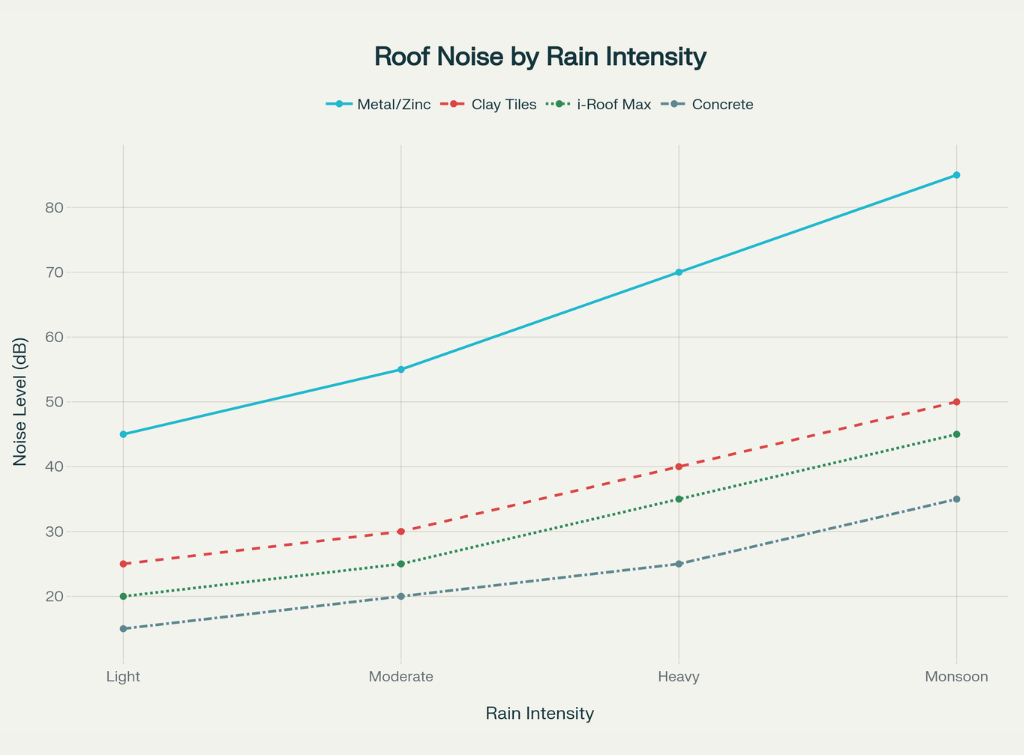
The primary cause of noise is the direct impact of raindrops on lightweight roofing materials like metal or zinc sheets (“takaran”). During Sri Lanka’s monsoons, rainfall intensity can reach 50-200mm per hour, creating a significant acoustic challenge. As the chart below illustrates, the noise from materials like metal skyrockets as rain becomes heavier, while better materials show a much smaller increase.
Materials with minimal mass, like thin corrugated metal sheeting, vibrate intensely when struck, acting like a drum and transmitting the sound of rain directly into your living space.
A Comparison of Common Sri Lankan Roof Panels
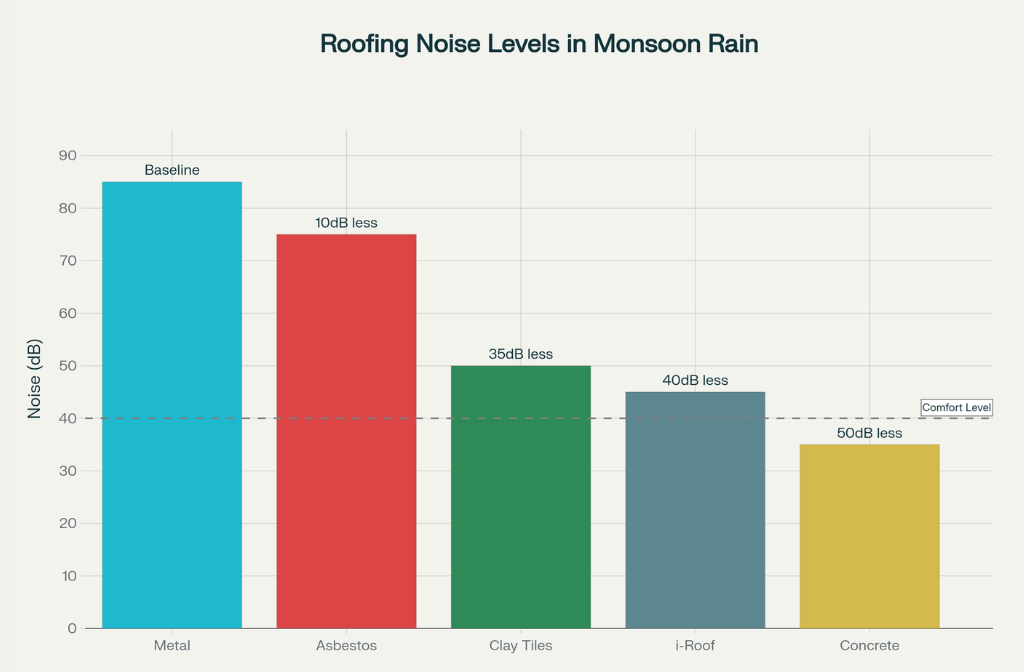
Different roofing materials handle monsoon rain very differently in terms of noise. As the data shows, there’s a significant gap between the loudest and quietest options.
- Metal/Zinc Sheets: This is the loudest option, establishing a baseline for noise at around 85 decibels during heavy rain—a level similar to heavy traffic.
- Clay Tiles (“Ulu”): A traditional and naturally quieter roof material. Clay roof tiles are a significant improvement, producing 35dB less noise than metal roofing.
- i-Roof ASA Polymer Sheets: A superior modern solution for a new roof, engineered to reduce rain noise by 40dB compared to metal. This brings the sound level comfortably within the ideal ‘Comfort Level’ for a peaceful home.
- Concrete: While heavy and expensive, a concrete roof is the quietest option, with 50dB less noise than metal.
For more details, see our complete guide on choosing the best sheet for roofing.
Quick Tips to Help Reduce Rain Noise on an Existing Roof
Add Roof Insulation for Effective Noise Reduction
Adding insulation is one of the most effective ways to reduce rain noise on an existing roof.
- Rockwool insulation: This dense material is a highly effective option for noise reduction, providing up to 30dB of sound dampening. It works to absorb sound waves and reduce the vibration transmitted through the roof structure.
- Glasswool insulation: A slightly more cost-effective choice that offers up to 25dB in noise reduction. It’s a great option to insulate and deal with moderate noise level issues.
- Key Installation Tip: Ensure the insulation covers the entire surface of the roof area between the purlins without any gaps. A gap as small as 1% can reduce the effectiveness of your seals and insulation by up to 50%.
Install a Soundproof Underlayment for Maximum Impact
- Mass Loaded Vinyl (MLV): This is a dense, flexible membrane applied directly under your roof sheeting that can provide 20-35dB of noise reduction.
- An underlayment works by adding significant mass to the roof, which is effective at blocking the transmission of outside noise without adding much thickness.
- For the best results, all joints and seams must be sealed with acoustic caulk. This prevents sound leakage and helps create a quieter home.
Modify the Roof Structure for Better Sound Dampening
- Adding a layer of solid decking, such as plywood or OSB, directly underneath your metal roof panels adds mass and stability.
- This extra layer of dense material helps minimise vibrations and flexing of the metal roof sheeting, creating a noticeably quieter roof.
- This home improvement modification also adds thermal mass, which can help regulate the temperature inside your home and reduce external sounds.
The Ultimate Long-Term Solution: Upgrade Your Roof Material
Why Modern ASA Polymer Roof Panels are Superior for Soundproofing
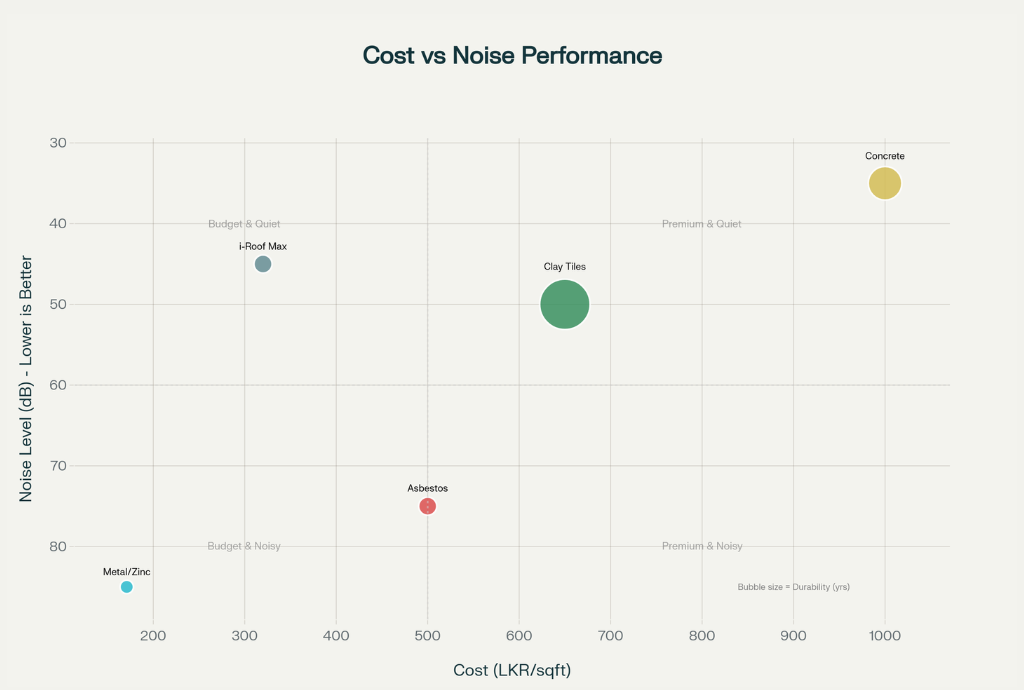
When considering a full roof upgrade, balancing cost, noise performance, and long-term durability is key. The chart below visualizes how different roofing options compare on these critical metrics.
As the data shows, modern roofing materials like Sivilima’s advanced i-Roof Max ASA polymer roofing sheets are engineered specifically to minimise rain noise. i-Roof Max is uniquely positioned in the ‘Budget & Quiet’ category, offering noise performance close to premium materials at a significantly lower cost of around LKR 320 per square foot.
The Benefits of a Complete Roof Upgrade for the Modern Homeowner
A full roof upgrade is the most effective way to solve noise pollution from rain permanently.
- Durability: In the chart, the size of the bubble represents the material’s lifespan. i-Roof Max offers excellent durability, providing a long-term solution that adds value to your home.
- Lightweight Structure: At only 480g/sqft, i-Roof is extremely lightweight, which can reduce the structural requirements and cost of your roofing frame compared to much heavier clay tiles or concrete.
- Low Maintenance: These materials are virtually maintenance-free and come with a 25-30 year lifespan, offering excellent long-term value and peace and quiet for any homeowner.
Interior Home Improvement Solutions to Insulate Against Noise
How a Suspended Ceiling Can Create a Sound Buffer
Installing a suspended PVC ceiling, like Sivilima’s i-Panel ceiling systems, creates an air gap between your roof and your living space. This gap acts as an effective sound buffer against noise from outside. This is a cost-effective solution for reducing the noise that enters your home, and the tongue-and-groove systems are designed for easy installation, making it a popular home improvement project.
The Dual Benefit of Attic and Ceiling Insulation
You can insulate the space above your existing ceiling to help absorb sound before it enters the room. Cost-effective materials like bubble foil insulation or double-sided aluminum foil can be used for adding insulation. This method provides the dual benefit of sound absorption and improved thermal performance, keeping your home cooler and creating a more comfortable living space. You can check our guides for easy installation steps.
Frequently Asked Questions (FAQ)
Will painting my metal roof reduce rain noise?
Painting offers minimal noise reduction (only 1-2dB). The primary benefits of painting a metal roof are heat reflection and rust prevention, not installing soundproofing.
How much does roof slope affect rain noise?
A steeper roof slope (above 30 degrees) can reduce noise by 5-10dB because rain runs off more quickly instead of hitting the roof surface directly. However, the choice of roof material remains the single most important factor for noise reduction. A steep metal roof will still be much noisier than a flatter roof made of a quieter material like asphalt shingles.
Can I install noise reduction solutions during the monsoon season?
It’s best to plan any exterior work, like a full roof upgrade or installing an underlayment, for the drier periods (February-April) to ensure a safe and proper installation. However, interior solutions like installing a suspended ceiling or adding attic insulation can be done year-round without issue.
What’s the most cost-effective solution for immediate noise relief?
Installing an insulated suspended ceiling offers the best combination of cost, performance, and aesthetic improvement for immediate relief. A system like Sivilima’s i-Panel can achieve a 20-30dB noise reduction while also improving the look of your room and adding thermal insulation value.
Achieving a Peaceful Home: Your Next Steps
You don’t have to live with the disruptive noise of heavy rain on your roof. From adding simple insulation to a complete roof upgrade with modern, quiet materials, there is a solution for every budget and homeowner. By understanding your options, you can make an informed decision to transform your home into a quiet and peaceful sanctuary, no matter how hard it rains outside.
Ready to explore your options? Browse our range of i-Roof and i-Panel products or visit a local showroom to speak with a specialist today.