Choosing between vinyl flooring and laminate flooring is a common dilemma for Sri Lankan homeowners. With our tropical climate bringing high humidity, monsoon rains, and the constant threat of termites, selecting a floor that is both beautiful and durable is critical. This guide provides a clear, in-depth comparison of laminate vs vinyl to help you decide which flooring is best for your home, your budget, and the unique challenges of the Sri Lankan environment.
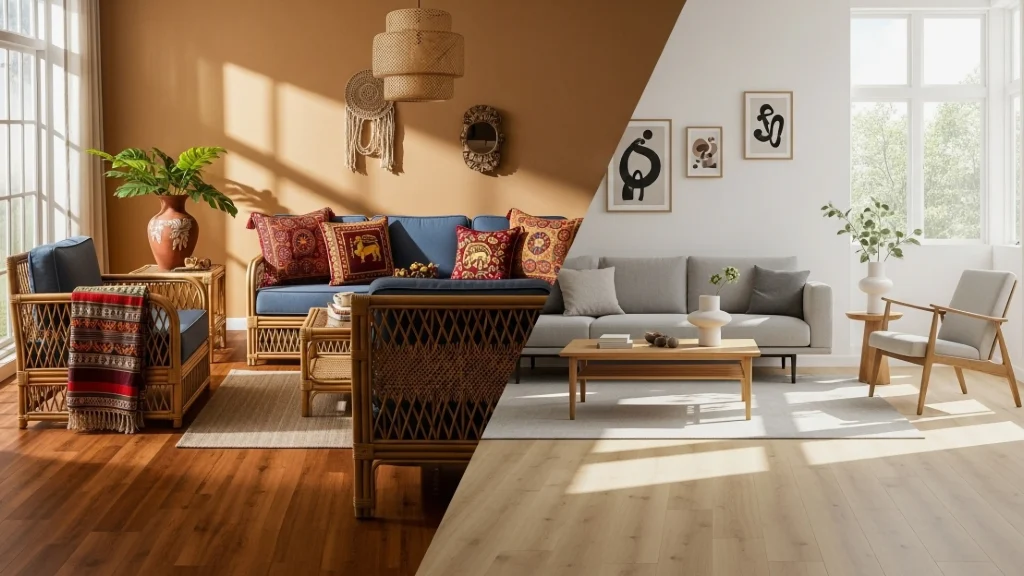
Vinyl vs. Laminate Flooring: A Quick Comparison
At a Glance: Key Differences for Sri Lankan Homes
- Water Resistance: Vinyl is 100% waterproof, making it ideal for the high humidity and potential moisture issues common in Sri Lanka2. Laminate has a wood-fiber core that can swell and warp with prolonged water exposure.
- Termite Resistance: Vinyl’s synthetic composition is completely inedible to termites, offering a major advantage. The wood core of laminate flooring is susceptible to termite damage.
- Durability: Laminate often has a harder surface layer, making it more scratch-resistant. However, vinyl (especially Stone Plastic Composite – SPC) is more resilient to dents and impacts. The key difference between vinyl and laminate durability in our climate comes down to water.
Vinyl vs. Laminate: Detailed Comparison for Sri Lanka
| Feature | Vinyl Flooring (SPC/LVT) | Laminate Flooring |
| Water Resistance | 100% Waterproof. The polymer/composite core is inert to moisture. | Low. The HDF wood core swells (up to 18%) and warps when exposed to moisture. |
| Termite Resistance | Excellent. 100% resistant as it contains no wood cellulose. | Poor. The wood-fiber core is susceptible to termite and pest attacks. |
| Cost (Material) | LKR 900 – 2,200 per sq. ft.. | LKR 800 – 1,800 per sq. ft.. |
| Scratch Resistance | Moderate to Good. Resists daily wear but can be punctured by sharp objects. | Excellent. The hard aluminum oxide wear layer offers superior scratch resistance. |
| Best For (in SL) | All areas, especially kitchens, bathrooms, basements, and coastal homes. | Climate-controlled areas only (e.g., air-conditioned bedrooms) with no moisture risk. |
| Lifespan (in SL) | 15 – 25+ years. Performance is consistent regardless of humidity. | 8 – 20 years. Lifespan is significantly reduced by moisture exposure. |
The Core Difference Between Vinyl and Laminate Flooring
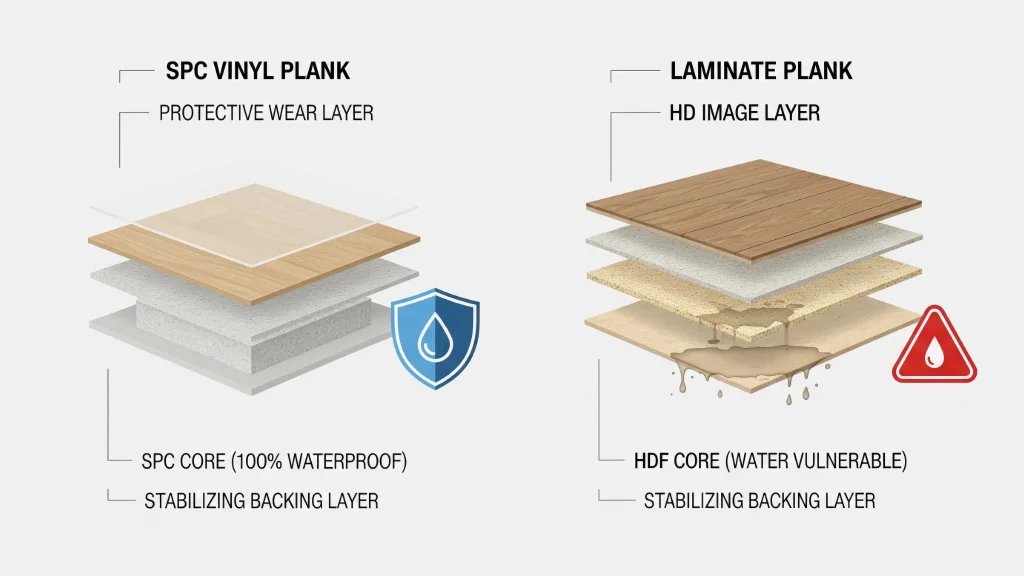
What is Laminate Flooring Made Of?
Laminate flooring consists of four layers: a backing layer, a High-Density Fiberboard (HDF) core, a high-resolution photographic image layer, and a protective wear layer. The HDF core is what gives laminate its rigid feel but also makes it the primary con, as it’s vulnerable to moisture and termites. In Sri Lanka, common thicknesses range from 8mm for residential use to 12mm for premium durability.
Understanding Luxury Vinyl Flooring and Vinyl Plank Options
This popular flooring comes in several forms of vinyl, primarily Luxury Vinyl Tile (LVT) and Stone Plastic Composite (SPC) flooring. Sivilima’s GoFloor SPC range, with its rigid limestone-PVC composite core, offers superior stability and dent resistance. Both LVT and SPC are 100% synthetic, making them completely waterproof and a poor food source for pests. We offer a wide range of vinyl plank flooring to suit any home.
Performance Face-Off: Laminate vs. Vinyl in a Tropical Climate
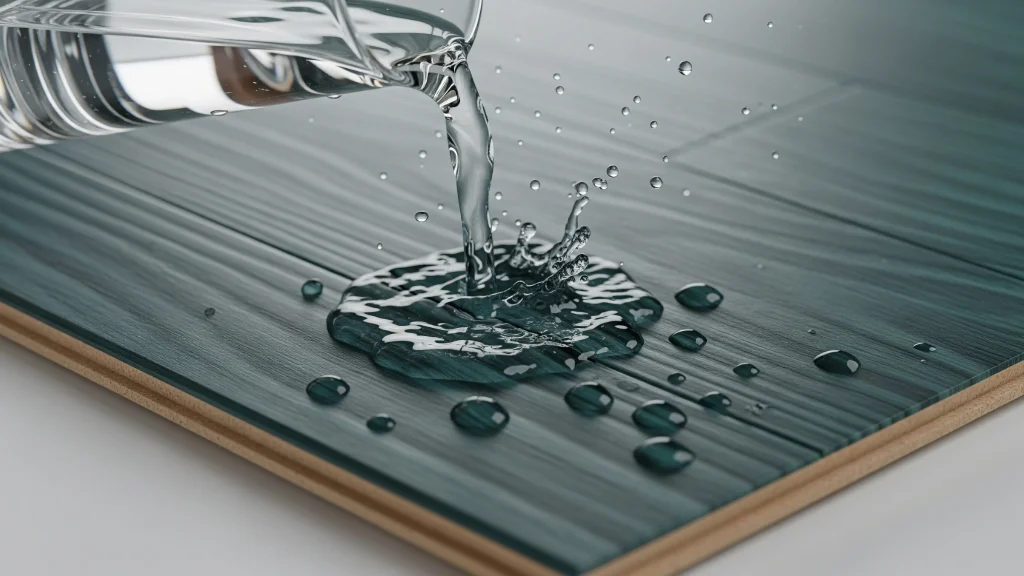
Durability, Water, and Humidity: The Ultimate Test for Flooring vs. Climate
Sri Lanka’s ambient humidity often exceeds 80% during monsoons, a critical challenge for any wood flooring. Laminate’s HDF core can swell by up to 18% when exposed to moisture, leading to warping and peeling. Even “water-resistant” laminate is not fully waterproof.
Luxury vinyl flooring (both LVT and SPC) is 100% waterproof. Its synthetic core does not absorb moisture, ensuring it remains dimensionally stable even in a humid bathroom or during the wettest months.
Choosing Between Vinyl or Laminate for a Bathroom or Kitchen
For a bathroom, kitchen, and other wet areas in Sri Lanka, vinyl is the only recommended choice for flooring. The difference between vinyl and laminate in these high-moisture zones is significant. Laminate’s vulnerability to water at the seams and edges makes it a high-risk flooring option. When it comes to a choice for flooring in wet areas, vinyl flooring wins.
Appearance and Style: Can You Get a Realistic Wood Look?
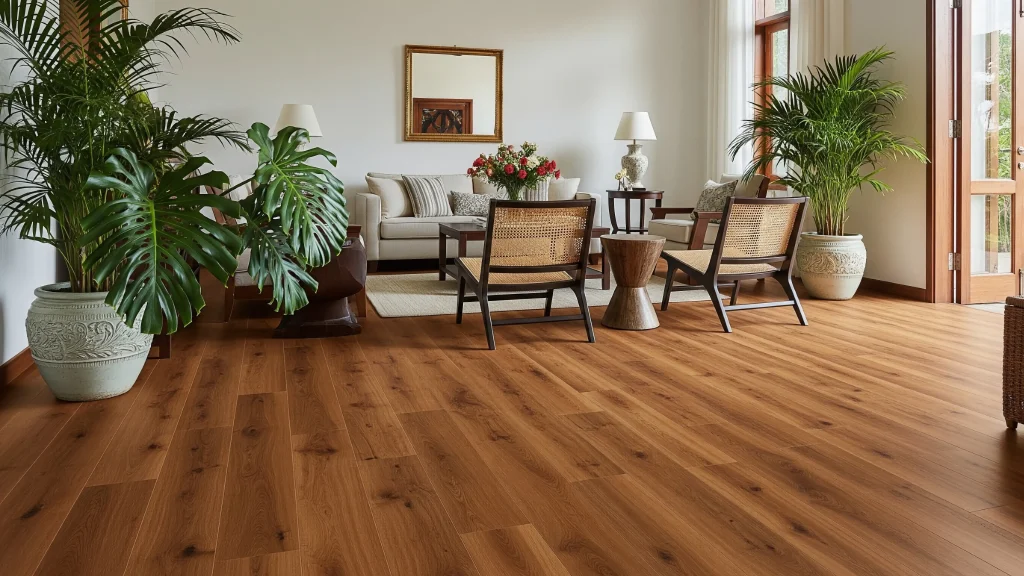
Both flooring choices offer incredibly realistic wood look designs, with Teak, Mahogany, and Walnut being popular in the Sri Lankan market. Laminate flooring sometimes offers deeper embossing for a more textured, wood-like feel underfoot. Sivilima’s GoFloor line, engineered with advanced printing technology, achieves stunning visual realism, mimicking everything from traditional wood flooring to ceramic tile.
Cost Comparison: Vinyl Flooring and Laminate Flooring Prices in Sri Lanka
Material Costs: Price per Square Foot for Plank and Tile
- Standard Laminate (8mm): Typically LKR 800 – LKR 1,200 per sq. ft.
- Standard Vinyl/LVT (2mm): Typically LKR 900 – LKR 1,400 per sq. ft.
- Premium SPC Vinyl (5.5mm): Can range from LKR 1,500 – LKR 2,200 per sq. ft. for superior durability.
Installation and Long-Term Value
Installation costs for both range from LKR 250 – LKR 550 per sq. ft. A vinyl plank is often slightly cheaper to install due to easier cutting and subfloor prep. While laminate has a lower initial cost, vinyl often provides better long-term value in Sri Lanka due to its resistance to water damage and termites, reducing the need for costly repairs or replacements. You can learn more about the process with our flooring installation guide.
Pros and Cons: Choosing Laminate Flooring vs. Vinyl Tile
The Key Benefits of Vinyl Flooring
- 100% Waterproof: The single biggest advantage in our climate.
- Termite Resistant: Its synthetic nature offers peace of mind.
- Durable & Low Maintenance: Easy to clean with wet mops and resistant to dents. Ideal for high-traffic areas.
The Pros and Cons of Laminate Flooring
- Pros: Excellent scratch resistance (ideal for pets), often a lower upfront cost, and a very realistic wood feel.
- Cons of Laminate: Highly vulnerable to water damage and humidity, susceptible to termite attacks, and difficult to repair (often requires replacing entire sections).
Making the Final Decision: Is Laminate or Vinyl Flooring and LVP Best?
Why Luxury Vinyl Plank (LVP) is the Smart Choice for Most Sri Lankan Homes
For the vast majority of homes, luxury vinyl (especially SPC vinyl plank flooring) is the superior choice. Its waterproof and termite-resistant nature directly counters the biggest environmental threats to flooring in Sri Lanka. It offers the perfect balance of aesthetics, durability, and resilience against our tropical climate.
When to Consider Laminate and LVP Alternatives like Engineered Wood
Laminate flooring can still be a good choice for climate-controlled spaces like air-conditioned bedrooms or upper-floor living areas with minimal exposure to moisture. If budget allows, engineered wood offers a real wood top layer, but it shares some of laminate’s vulnerabilities to humidity and requires careful maintenance. There are many other flooring options like ceramic tile to consider as well.
Frequently Asked Questions (FAQ) about the Difference Between Vinyl and Laminate
Which floor is cheaper in Sri Lanka, vinyl or laminate?
Standard laminate flooring generally has a lower upfront material cost (starting around LKR 800/sq.ft) compared to vinyl (starting around LKR 900/sq.ft). However, vinyl’s durability against moisture often makes it a better long-term investment.
Is laminate flooring good for the Sri Lankan climate?
Standard laminate struggles with Sri Lanka’s high humidity. Water-resistant varieties are better, but they are not fully waterproof. For most areas, especially kitchens, a bathroom, and ground floors, vinyl is a much safer and more reliable option.
For a kitchen or bathroom, which flooring is best?
Only vinyl flooring is recommended. Its 100% waterproof construction is essential for handling the spills, humidity, and direct water exposure common in these rooms.
What is the main difference between vinyl and laminate durability?
Laminate is typically more resistant to surface scratches due to its hard wear layer. Vinyl is more resistant to dents and is completely waterproof, which is a more critical durability factor in Sri Lanka.
Conclusion: Your Best Flooring Choice in Sri Lanka
For Sri Lankan homeowners, the choice between vinyl vs laminate flooring becomes clear when considering our climate. While laminate offers excellent scratch resistance and a lower initial cost, its weakness against moisture and termites makes it a risky long-term investment.
Vinyl flooring, particularly SPC luxury vinyl, emerges as the decisive winner. Its complete waterproofing, termite resistance, and excellent durability provide a reliable, long-lasting, and beautiful flooring solution perfectly suited to withstand the demands of a tropical environment.
Ready to find the perfect floor for your home? Explore our extensive collection of Sivilima GoFloor vinyl designs or request a quote from our team today.